
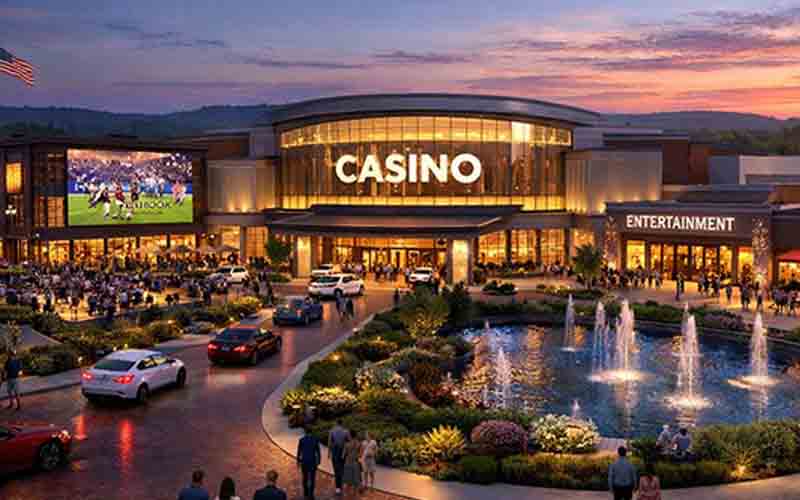
New Hampshire’s once modest charitable casino scene is undergoing rapid transformation as corporate operators, loosened regulations, and multi-million-dollar projects reshape the state’s gambling landscape. According to multiple sources, relaxed wagering limits, expanded machine options, and 24-hour operations are fueling a wave of new developments that could reposition the Granite State as a regional casino destination.
 New Hampshire’s once modest charitable casino scene is undergoing rapid transformation as corporate operators, loosened regulations, and multi-million-dollar projects reshape the state’s gambling landscape. According to multiple sources, relaxed wagering limits, expanded machine options, and 24-hour operations are fueling a wave of new developments that could reposition the Granite State as a regional casino destination.
For New Hampshire players, especially those in a state with no commercial or tribal casinos, the move toward larger, amenity-rich charitable venues is changing where and how people gamble, and how much money flows to local nonprofits and the state budget. While online casinos in New Hampshire are limited to offshore sites, the recent change in the law suggests the state is open to further expansion, and full-scale state-regulated casinos could be on the horizon.
From Charity Halls to Full Casino-Style Venues
New Hampshire’s local casino sector is built around a charitable gaming model in which private operators run venues but must share a significant portion of gross table-game revenue with nonprofits and the state. Under current laws, charities receive 35% of gross table-game revenue, the state takes 10% for the general fund and education trust fund, and operators keep the remainder. This structure has allowed casino-style growth while maintaining a policy focus on local benefit rather than purely commercial profit.
What began as small, “mom-and-pop” charity rooms offering bingo and low-stakes card games has evolved into facilities that more closely resemble full-scale casinos. Today’s properties feature large gaming floors, multiple table games, banks of machines, live entertainment, and on-site restaurants, anchoring broader mixed-use or hospitality developments in cities such as Salem, Manchester, Hampton, and Nashua.
Regulatory Changes Driving the Expansion Wave
Recent changes to New Hampshire’s charitable gaming law have been a key catalyst for the current building boom, particularly around machine play and betting limits. Lawmakers authorized slot-like video lottery terminals (VLTs), which operate faster than historical horse racing (HHR) machines and can generate higher hourly wagering volumes. The law also eliminated previous betting caps on gaming machines and liberalized buy-ins for high-stakes card games, making the market more attractive for larger investors and sophisticated operators.
In addition, charitable casinos are now permitted to operate around the clock if their host municipality approves 24-hour gaming. That flexibility has given local planning and zoning boards greater leverage in shaping how projects fit into community plans, while at the same time offering operators more potential revenue and players more choice in when and where to gamble.
Major Projects: Salem, Hampton Beach, Manchester and Nashua
One of the most significant projects is Churchill Downs Incorporated’s plan to transform Casino Salem into the Rockingham Grand Casino, a large-scale charitable venue at The Mall at Rockingham Park. The company has budgeted between $180 million and $200 million to build a roughly 160,000-square-foot property with 825 historical racing machines, 32 table games, and 12 electronic table game seats, plus a 900-seat entertainment venue and multiple dining options. According to Churchill Downs, local planning board approvals are in place and the property is targeted to open by mid-2027.
On the Seacoast, the Hampton Planning Board has granted final approval for a major redevelopment of the Hampton Beach Casino property at 169 Ocean Boulevard. The project includes new residential units, a hotel, expanded entertainment space, and a substantially enlarged charitable casino that is expected to grow to around 52,000 square feet, more than five times its current size. Reports indicate that the redesign is explicitly linked to the state’s updated charitable gaming law and the introduction of VLTs and higher-stakes gaming.
In Manchester, developers of the Revo Casino on South Willow Street have secured more than a dozen zoning variances for a planned expansion. Meanwhile, in Nashua, an ambitious proposal to add roughly 93,000 square feet of casino and dining space to the Sheraton Nashua hotel is before local authorities, with New Hampshire Public Radio describing a pivotal planning board vote on the project. If approved and built, these venues would further densify casino-style gambling in southern New Hampshire, a short drive for many Massachusetts and Maine residents.
Local Planning, Community Impact, and Industry Outlook
Municipal planning and zoning boards are playing a central role in shaping where and how the new wave of casinos is built. In Hampton, Salem, Manchester, and Nashua, local officials are evaluating everything from traffic and parking to noise, housing impacts, and integration with surrounding retail or residential areas before granting approvals. These reviews give communities some control over the pace and scale of casino growth, even as state law becomes more permissive.
Industry observers suggest that New Hampshire’s charitable model, coupled with loosened rules and strong demand, will likely support continued expansion in the medium term. Projects with projected openings around 2027, including Rockingham Grand and phases of Revo Casino’s redevelopment, indicate a multi-year pipeline of construction and investment. For players and charities alike, the result is a market that increasingly resembles the regional casino industry, despite its non-traditional regulatory foundation.
What This Means for New Hampshire Casino Players
For New Hampshire casino fans, the current boom means more choice, larger venues, and a broader mix of games and amenities within state lines. As projects in Salem, Hampton Beach, Manchester, and Nashua come online, players can expect more table games, expanded machine offerings such as VLTs and HHR devices, and additional entertainment and dining options in casino environments that more closely resemble full-scale regional properties.
At the same time, the charitable framework remains central: a fixed share of every eligible table-game dollar wagered continues to support local nonprofits and state funds, even as private operators invest hundreds of millions of dollars in new facilities. For players choosing where to gamble, New Hampshire’s model means that visits to these expanding casinos contribute not only to operator revenues but also to community organizations and public budgets across the state.
Tip: For those seeking even greater convenience, offshore sites offer a wide range of online casino games, including slots, table games, and live dealer games, available from anywhere in the state. See our guide to online gaming options here: https://onlinenhcasinos.com/games/